How to make a product management game with kittens
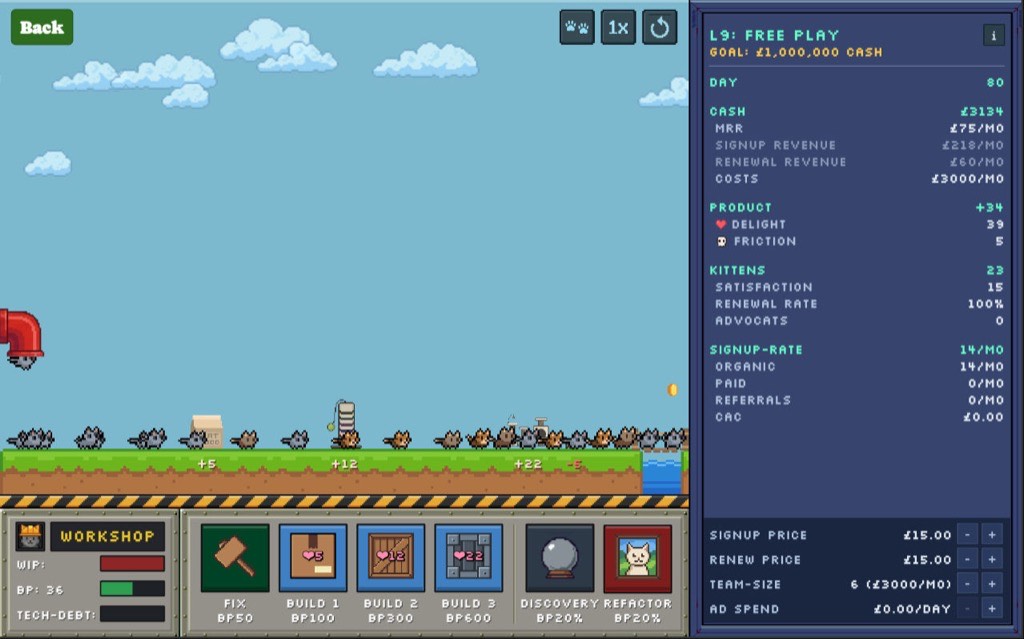
I made Kitten PM, a free product management simulation game, inspired by Lemmings. But the lemmings are kittens, and the kittens are your customers. Obviously.
I made it because after 20 years working in product, I still struggle to explain the complexity and interconnectedness of it all.
Discarding the ‘but should I build it?’ question. I wanted to see if there was an interactive way to share what I’ve learnt, and mimic the learning loops that you only get from doing. If you understand the first principles then everything else can follow.
This is my thought process …
Games & trade-offs
I like product management, I also like playing strategy games. Both involve balancing trade-offs.
- Civilisation: Do you focus on science or war? Do you build a cheap unit, or wait longer for a better one? (roadmapping)
- Sim City: Do you set higher taxes to fund better services, or lower taxes to attract growth? (pricing)
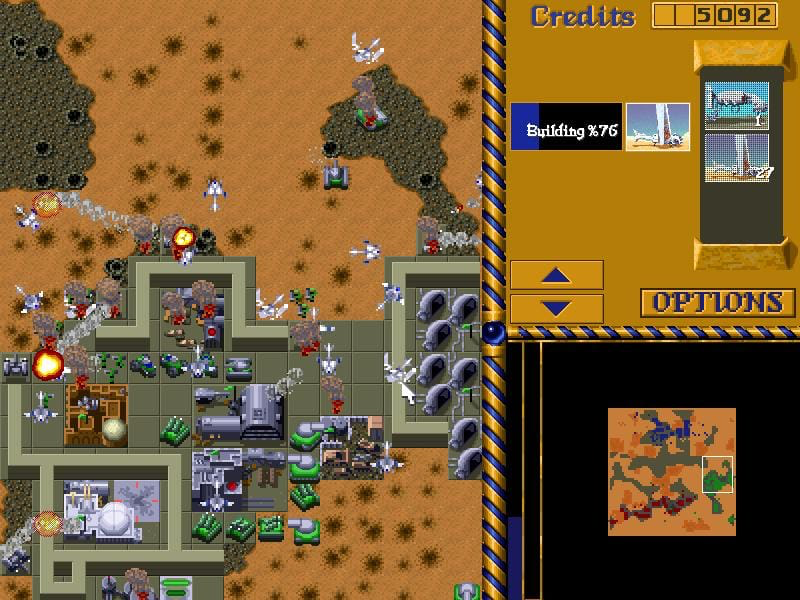
- Dune II: Do you build slowly on firm foundations, or fast & cheap on sand? (tech debt)
The trade-offs in product management are endless, but also difficult to communicate to non-product people.
Product books tend to talk in frameworks, & invent new terms for the same things, rather than demonstrating the underlying tradeoffs.
Could product trade-offs be a good source material for a sim game? & would it be fun to play?
Product principles
I decided early on that I wanted my sim to teach product principles not game mechanics. As if you can learn to think in first principles, everything else can follow.
It also made designing the game mechanics much simpler, as I didn’t need to invent new concepts, just visualise real ones.
I abstracted product down to the following core principles:
- Creating value is central to everything a product manager does.
- To create business value, you need to create customer value.
- Customer value is the value (delight) the customer gets from the product, minus any friction.
- Building features creates value (delight). Fixing bugs & balancing pricing reduces friction.
Or to keep it really simple: To create business value (cash), you need to create customer value (less friction)
Product pattern
System / product thinking is by definition enormous, so I wanted to create a simple pattern that everyone can recognise, and then expand upon it.
I wanted to find a pattern where the player could see and feel the impact of their tradeoffs. A game-view representation of customers experiencing the product value and friction. But also a cold-hard view of the outcomes, the real-world product metrics. With the ultimate metric & objective of the game being cash.
So naturally, Lemmings popped into my brain:
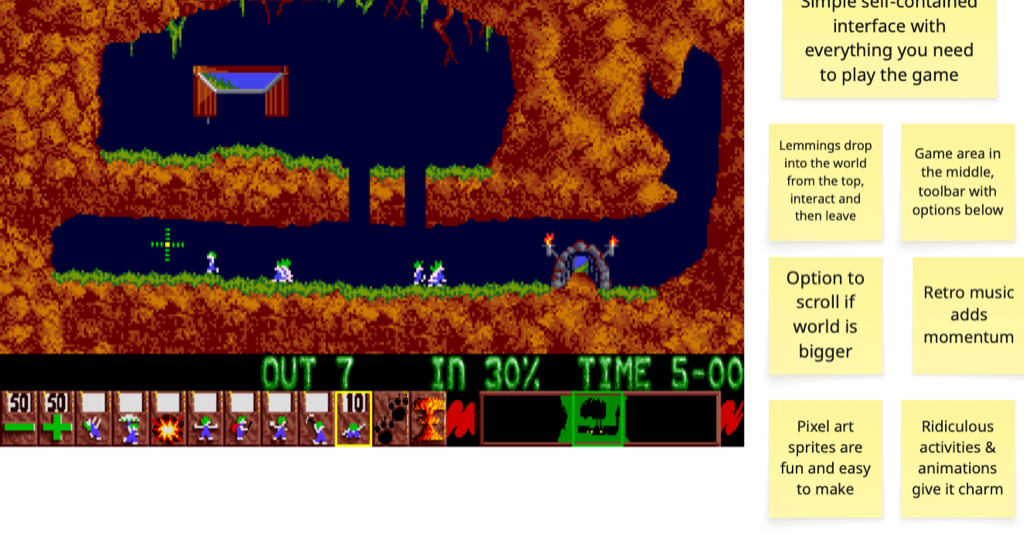
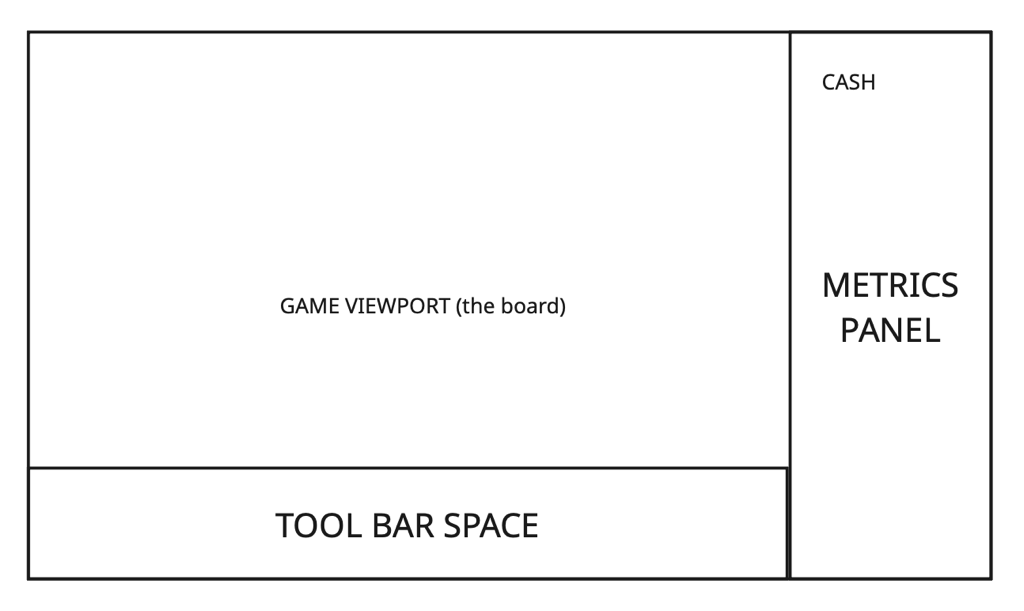
Riffing on the Lemmings theme, I came up with pattern:
- Kittens represent customers obviously.*
- A retro-game landscape (board) represents the product experience.
- Kittens loop left-to-right across the board interacting with elements that trigger events.
- If the kitten is happy enough at the end of each loop, they renew and repeat the circuit - if not, they churn and are removed from the board.
- The player can modify the board (workshop, pricing strategy etc) to change the outcomes.
- Real-world KPIs in the right panel, teach the player cause & effect.
Which looked something like this:
* A short side excursion on why Kittens: I wanted to create a representation of customers experiencing the product. Pixel kittens work well for this. They are cute - so you feel a bit sad if they get a bad experience. And they scale well - from individual customers in start-up products, to the big caterpillar of Lemmings that you’d get in a high-growth product. Plus, kittens don’t take themselves too seriously. I like that.
The 30 day loop
I decided to base the product on a classic 30-day subscription loop. It’s a common product model, it bounds the gameplay into a simple, repeatable environment. I also started my career in web hosting, so it’s a loop I know well.
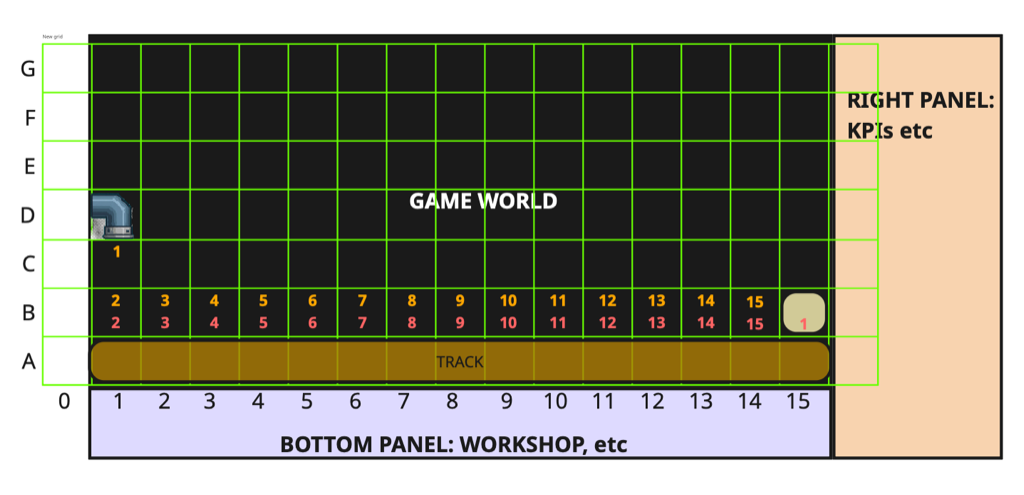
In Kitten PM, kittens sign-up to the product via the pipe on the left, and walk left-to-right across the track encountering value or friction as they go. Exactly 30 days later, they reach the bridge at the end of the track - if they’re happy they’ll renew and take another 30-day loop around the track. And if not, they’ll leave.
In order to generate real product metrics, the loop timing needed to exactly sync with the day counter. The trick was to make an offset loop so kittens pay exactly on day 1, 31, 61, etc.
Incremental complexity = levels
Early 90s games (including Lemmings) often repeat the same pattern across levels, but with increasing difficulty. I could use this pattern to my advantage to avoid overwhelm, and introduce (teach) one product mechanic per level. And under the hood I could create the levels by switching feature flags on or off.
Design principles
By this point the spec and thoughts were starting to get big. So to keep the product coherent & inform future development decisions, I created some overarching design principles. I think they held up surprisingly well.
- Stay true to reality - no invented rules, only simplified representations of real PM dynamics.
- Fun first, teaching second - learning is the happy bonus (IMO I still need more fun).
- Don’t over explain things - the best learning is doing, trying things out, and sometimes trying again.
- Reveal one trade-off per level - individually each trade-off should be simple to grasp, but over time they stack and interact with each other to create complexity.
The maths
Then it was just a matter of prioritising which product mechanics should feature, and coming up with a reductionist mathematical representation for each.
To keep it simple, I treated each one in isolation, before mapping them into a system tautology to see how the components combine.
The build
With all this done I was ready to build. I opened my favourite LLM editor, asked it to create a phased implementation plan and start work.
Hours later, Claude confidently pronounced the masterpiece was complete, and everything had worked exactly as intended. You can play with it here.
In part two, I’ll explain why one-shot vibe-coding often isn’t the reality, and what it actually took to get to MVP. In the meantime, try Kitten PM and see if you can earn your own product certificate.