
Winners in the AI gold-rush
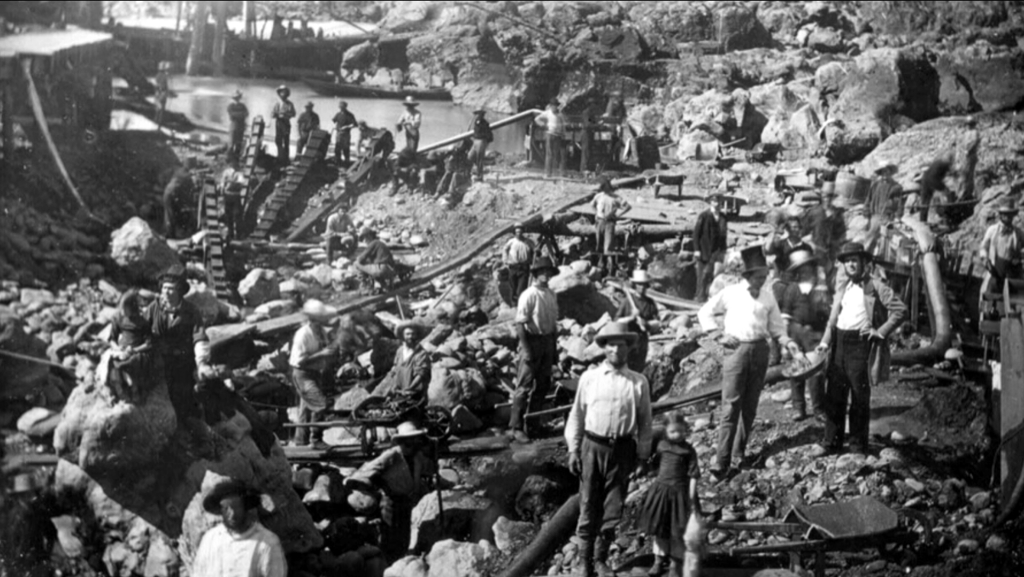
When I worked in web hosting, a common expression was ‘during a gold-rush, sell shovels”. The idea being during a gold-rush, individual .com ventures may or may not strike gold, but the shovel seller will always profit without incurring the risk.
GenAI is undoubtedly the latest gold-rush, but this time round where will value be generated?
But before we jump in, some important context via Ed Zitron.
The ‘enshittifinancial crisis’
I read this newsletter piece from Ed Zitron before the new year, and it stuck with me. It is deliberately outspoken, but it makes some interesting counterpoints to the LinkedIn AI hype. I’m not sure if his predictions will play out, but in the least it provides a well-reasoned null-hypothesis.
I’d recommend reading the article in full, but it is very long so here’s a short(er) summary:
- Stocks are priced according to the promise of future growth & in tech it is always growing.
- No-one looks too deeply at the underlying fundamentals, because it is not in their interests to do so.
- But if you do look, you’ll see impossibly huge spending on CAPEX, circular deals between suppliers, and negative margins in AI that become worse with scale.
- Valuations on paper look great. But IPOs are drying up, limiting future capital, AI fundamentals are not solid, and require ever increasing capital injections.
- At some point the cash injections will run out, losses will start, and VC funds will deplete further. Triggering a wave of failures across the ecosystem.
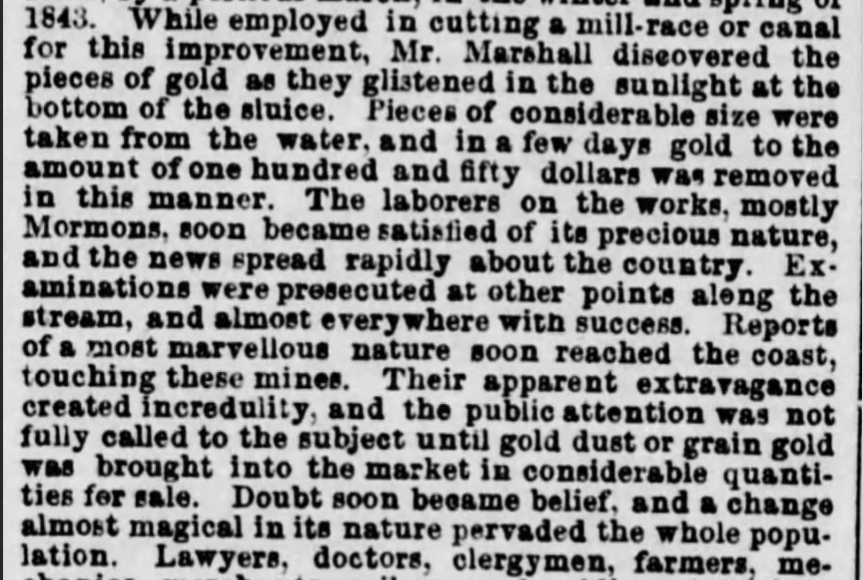
During a gold rush sell shovels
Context loaded, back to the metaphor! In a gold-rush pattern there are three classes of winners:
- Miners who strike real veins. The rare but outsized winners, and poster boys of the rush who create demand for …
- Shovel sellers. A safe-bet, consistent, and cash-flow positive. First-movers can make early profits but increasing supply inevitably leads to commoditization.
- Landowners and railroads are the ones who control access, routes and logistics. This is where durable value builds.
In web 1.0, the spark was www (1990) and the Netscape web browser (1995), a free and open foundation for new ways of thinking and new forms of business. This is how it played out:
- Miners were the .com start-ups who found an early niche, got traction and IPO’d (eBay, Amazon, Yahoo). They created headlines and in-turn inspired waves of future miners.
- Shovel sellers were ISPs, and web-hosting providers (I worked at Pipex, & Host Europe). Steady revenues while the rush lasted, but became increasingly commoditized.
- Landowners were the platforms and hyperscalers, though their dominance only emerged later (Google, AWS, Facebook).
AI starts with landowners
The spark for the AI gold-rush started differently, this time round the foundations are a monetized infrastructure layer (the LLMs). So rather than landowners emerging from the chaos of web 1.0, we’re starting with the landowners. This fundamentally changes the power dynamic.
Landowners and railroads are the LLM models (OpenAI, Anthropic, Microsoft, Google etc).
This is where it starts, and currently if you want to use genAI in your business, then you will very likely be dependent on one of these suppliers. They control access and pricing, and entry barriers for new LLMs are high (specialist staff, high capital requirements), but alternatives such as China’s DeepSeek could challenge this.
They are the posterboys of AI and creators of FOMO, with eye-popping valuations, and huge promises of transformative potential.
Shovels are GPUs and more recently RAM. That Nvidia’s market cap briefly exceeded $3tn, is the clearest demonstration where investors believe value lies. This is supply and demand ad extremis; and as prices can go up, the reverse is also true.
Miners are currently the new wave of AI powered services (eg Lovable, Windsurf). These are the first companies to really leverage genAI, they have first-mover advantage, lots of hype, and outsized valuations.
But, as Zitron points out, their moat is very shallow. I love Lovable, but it is essentially a nice UI sitting on top of someone else’s model. It is hugely vulnerable to the underlying LLM, indeed something similar has already happened.
Jasper.AI, an early AI-powered copywriting tool built on GPT-3, launched in Jan 2021 and reached a valuation of $1.5bn. Revenues grew fast until ChatGPT launched in Nov 2022, creating a low-cost competitor overnight. Revenues collapsed, founders stood down, and Jasper has pivoted into marketing automation, a more conventional and defendable SaaS tool.
Enter the refiners
So what are the durable opportunities for everyone else?
Refiners are a new addition to the gold-rush metaphor. These are the companies that have a valuable raw material (data, customers, physical product, workflows, regulatory niche) and embed AI to improve their proposition, yield, quality, speed or cost before their competitors do.
For example, a pharma company using proprietary data to accelerate drug discovery, an online bank redesigning for a future where users interact through agents, not apps.
Update 20th March: Or a manufacturing company that could benefit from automation. Bezos certainly seems to think so.
This flips the web 1.0 pattern, where incumbents were disrupted by online equivalents. Here the classic companies have something that AI cannot easily replicate, they have a defensive moat. But they also have the raw material to gain offensive advantage, if they can successfully leverage AI before their competitors do.
Of course, this all depends on AI actually delivering. If Zitron is right and the bubble bursts, the landowners and miners are the most exposed. But conventional companies with durable moats (real customers, data, workflows), and the appetite to seriously hedge their bets, they’re durable either way.